Honoring Joseph P. Addabbo Family Health Center: Expanding Access, Together
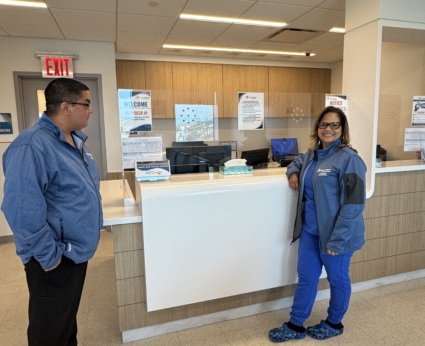
For nearly 40 years, Joseph P. Addabbo Family Health Center (JPAFHC) has served as a critical access point for care in some of New York City’s most geographically isolated and underserved communities: Southeast Queens and Red Hook, Brooklyn.
But today, the organization is focused not just on where it has been, but where it’s going.
“We’re committed to strengthening our services, expanding access, and continuing to focus on prevention and health equity,” said Renee Hastick-Motes, JPAFHC’s Chief Executive Officer.
That next chapter—centered on growth, quality, and innovation—is being shaped in close partnership with Primary Care Development Corporation.
At the heart of JPAFHC’s impact is trust.
It’s visible in the relationships JPAFHC has cultivated with its patients, often spanning multiple generations. It is not uncommon for patients who once came to the health center as children to return as adults with families of their own.
“You’ll meet people whose parents received care here, and now they’re bringing their kids,” Hastick-Motes said.
For many families, JPAFHC is more than a healthcare provider. It’s a constant in their lives, a place they return to because they know what to expect: compassionate care, familiar faces, and a sense of belonging.
That continuity can shape lives in unexpected ways. Hastick-Motes recalls one employee whose connection to the health center began before she was born. Her mother received prenatal care at the health center, and years later, her mother’s experience inspired her to pursue a career in healthcare, eventually joining JPAFHC as a medical assistant.
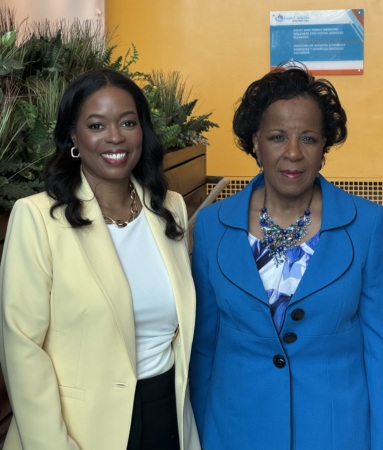
For Betty A. Leon, JPAFHC’s Board Chair, those stories reflect something deeper about the organization’s role in the community.
“People feel like they’re not going to the doctor,” she said. “They’re going to a place where they can trust everybody.”
That sense of trust is reinforced by long-term relationships with providers and intentional efforts to create a welcoming, patient-centered environment. It’s also sustained by a commitment to listening and responding to the community’s needs over time.
In neighborhoods where residents have not always felt seen or well-served by the healthcare system, that trust builds continuity of care, strengthens engagement, and ensures that patients come back, not just when they are sick, but to stay well.
People living in JPAFHC’s service area face persistent barriers to care, from transportation challenges to high rates of chronic disease.
Meeting those needs at scale requires more than clinical expertise—it requires infrastructure, capital, and the ability to grow strategically over time. That’s where PCDC has played a pivotal role.
“Our partnership with PCDC goes back decades,” Hastick-Motes said. “It has been very instrumental in helping us expand our capacity to serve.”
JPAFHC has been a PCDC client for 25 years. Since 2000, PCDC has provided $25.4MM in loans and $8.7MM in NMTC allocation to open, renovate, or expand four of JPAFHC’s existing clinics. JPAFHC’s most recent financing with PCDC was in 2025 to refinance the balloon payment of maturing debt originally used to expand its Arverne site.

Through financing and technical support, PCDC has enabled JPAFHC to expand and modernize its facilities, increasing access to care in communities where options are limited.
“PCDC’s support has allowed us to strengthen our infrastructure and invest in modern, patient-centered facilities,” she said. “Ultimately, those investments translate into better access to care for the community.”
And the health center is working with PCDC for its patient-centered medical home (PCMH) certification, taking advantage of PCDC’s expertise in helping health centers transform their operations.
“The partnership with PCDC hasn’t only been operational and financial—it has also helped us with our care quality,” Hastick-Motes said. “We’re looking not only at how many patients we’re seeing, but whether our patients are getting better,” she said.
As JPAFHC looks to the future, its priorities are clear: expand access, deepen impact, and improve outcomes.
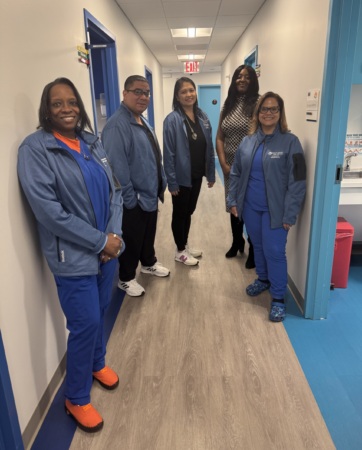
A key focus for the coming years is strengthening primary care as the foundation of community health, ensuring patients receive consistent preventive care rather than relying on emergency services.
“We want to make sure our patients understand the importance of primary care,” Hastick-Motes said.
At the same time, the health center is planning to expand specialty services to better meet patient needs closer to home, reducing the need for long, difficult trips outside the community. In a geographically isolated region like the Rockaways, where transportation barriers and a high concentration of elderly and medically vulnerable residents can limit access, JPAFHC is exploring mobile health solutions.
“How can we get to them?” Hastick-Motes said. “Our new mobile health unit will help that.”
Betty A. Leon sees that approach as essential to the organization’s future.
“We are trying to be self-sufficient and bring care to people who can’t get to us,” she said.
JPAFHC is also investing in community-based strategies, including partnerships with schools and local organizations, to reach patients earlier and support healthier outcomes over time.
“We want to provide care to people when they’re young,” Hastick-Motes said. “That’s how you build a healthy community.”
As the organization approaches its 40th anniversary, JPAFHC is pairing its long-standing community presence with a forward-looking strategy—one that emphasizes quality, access, and innovation.
That work will continue to rely on strong partnerships.
“Partnerships like what we have with PCDC are very critical,” Hastick-Motes said. “They enable us to grow in ways that directly benefit our patients.”
By combining mission-driven financing, operational expertise, and a shared commitment to health equity, the JPAFHC and PCDC are working together so that growth translates into meaningful impact.
With a clear vision for the future and a strong partner by its side, JPAFHC is well positioned to continue expanding access to high-quality care where it’s needed most.
“There aren’t many organizations that can point to quarter-century lender/borrower relationships, but PCDC is proud to include JPAFHC as one of these partnerships,” says William O’Brien, Executive Vice President at PCDC. “This means standing together through Superstorm Sandy, economic crises, and policy changes that threaten the FQHC delivery model. We look forward to supporting JPAFHC for its next 25 years!”
PCDC is excited to honor JPAFHC at our 2026 Gala on June 1. Join us at the Gala to celebrate their successes and connect with other primary care leaders.