
On her last day as CEO of Primary Care Development Corporation (PCDC), Louise Cohen was still doing what she had done throughout her career: pushing the work forward. In one of her final conversations as CEO, she brought staff together to brainstorm how to bring together leaders across New York City to shape the future of primary care. Even as she was stepping away from the role, her lifelong commitment to improving our health care system remained.
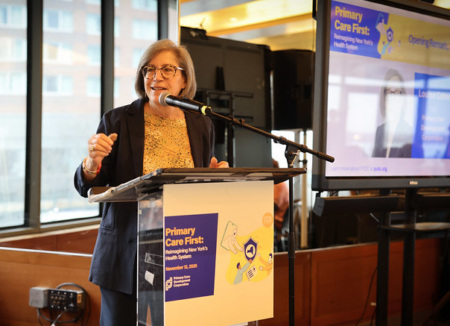
Her dedication to that work was grounded early on in seeing the real-world consequences of a fragmented system—from avoidable emergency room visits to gaps in preventive care. “If you can improve the way primary care is delivered, you can have real, positive impact on people,” Cohen said. “And that’s what matters to me.” That belief carried through her roles as Deputy Commissioner for the Division of Health Care Access and Improvement in NYC Department of Health and Mental Hygiene and Vice President for Public Health Programs at Public Health Solutions, and her tenure at PCDC, first as a board member and later as CEO.
Cohen’s leadership style is described by her colleagues as deeply supportive with high expectations and strategic while being intensely practical. For many who worked with her, one of her defining traits was her ability to see potential in others—and insist they act on it. “She would just say, ‘You can do it,’” recalled Avital Havusha, Vice President for Programs at New York Health Foundation, who worked closely with Cohen for more than a decade. “She pushed you in and let you contribute.” That approach, especially for early-career staff, created an environment where people were expected to step up quickly and were trusted to do so.
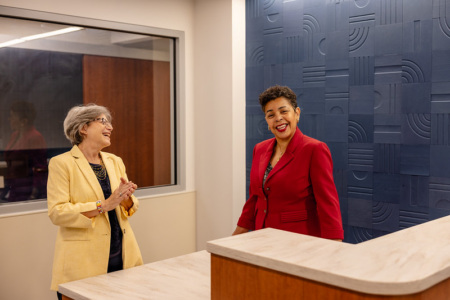
At the same time, Cohen set a relentless, energizing pace. “Work really hard, do it well, and keep moving—because there’s more to do,” Havusha said, describing the rhythm Cohen established across teams. It wasn’t urgency for urgency’s sake, but an optimistic worldview: the work could always reach further, serve more people, and have greater impact.
That drive was matched by an intellectual curiosity and humility that shaped how she led. As longtime colleague William O’Brien, Executive Vice President at PCDC, recalled, Cohen was “the only board member who came up to me and said, ‘How did you do that?’—and then kept asking questions,” after a complex financing deal resolved a dispute between two health centers. She wasn’t afraid to probe, to challenge assumptions, or to admit what she didn’t know. “Her honesty was refreshing, as was her humility,” O’Brien said.
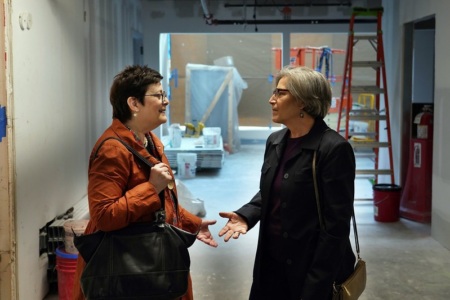
Under Cohen’s leadership, PCDC underwent a remarkable transformation. When she stepped into the CEO role, the organization was a respected community development financial institution with a strong track record in New York. Over the next ten years, it expanded its reach, sharpened its voice, and grew into a national leader in primary care policy and investment.
“The transformation into a New York State and national thought leader—we were not that a decade ago,” said Isaac Kastenbaum, Vice President of Consulting and Training at PCDC. “Now, people come to us to learn how policy should be changed.” That shift elevated not only PCDC’s influence, but also its credibility as a lender and strategic partner across health care.
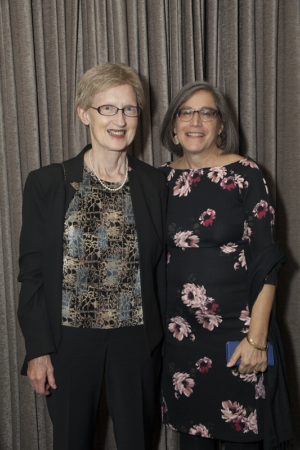
For Ronda Kotelchuck, PCDC’s founding CEO, that growth reflected Cohen’s extraordinary ability to see—and act on—what was possible. “She took the organization places that I would not have been able to do,” Kotelchuck said. “I give credit to her sense of possibility and her ability to move on opportunities.” From expanding beyond New York to advancing ambitious policy agendas, Cohen consistently pushed beyond what had been done before, helping PCDC reach new levels of impact.
Central to that impact was her ability to operate at multiple levels at once. Cohen could zoom out to the big picture—rethinking how systems of care were structured—and then zero in on the details that made those systems function. In one example from her time in public health, she pointed out that if frontline providers didn’t have the right tools in the room during patient visits, even the best-designed programs would fail. “If the form isn’t in the room, they’re not going to fill it out,” she said—a simple but powerful illustration of her focus on making systems work in real-world settings.
At her core, colleagues say, Cohen’s work has always been driven by a deep sense of purpose. “She’s a kind, empathetic person who deeply cares about communities,” Avital Havusha said. That commitment showed up not only in the outcomes she pursued, but in the culture she helped build—one that encouraged people to be bold, to think strategically, and to stay grounded in the mission.
“I’m stubborn,” Cohen said with a smile. “I really believe that, to have an impact, you have to keep plugging away at it.” This is the throughline of her career: a refusal to accept the status quo and a determination to keep moving toward something better.
The work she helped shape continues in the policies advanced, the systems strengthened, and the people she mentored along the way. Primary care still faces challenges, but thanks to Cohen’s leadership, the field is stronger, more connected, and better prepared to meet them.
PCDC is excited to show our gratitude to Louise at our 2026 Gala on June 1. Join us at the Gala to celebrate her impact and connect with other primary care leaders.